
In this article we discuss the truth about occupational therapy and the everyday wins that matter. Occupational therapy (OT) can look deceptively simple from the outside. A table covered in pegs. A therapist guiding your wrist. A task you’ve done a thousand times before – brushing your hair, lifting a mug, fastening a button. When you’re recovering from a stroke, brain injury or complex polytrauma, it’s easy to wonder why these small movements matter, or whether the effort is worth it.
Occupational therapy is quietly powerful. It rebuilds the foundations of everyday life – the things you only notice when they’re taken away. The quiet work is where the real transformation happens. OT rebuilds the functional skills that help you live independently – the things that don’t look dramatic but make life feel possible again.
It’s not about exercises. It’s about your identity.
OT focuses on the movements and tasks that shape daily life: writing a birthday card, dressing yourself, cooking a simple meal, answering a text, holding a cup without spilling it. None of this is fluff. After neurological injury, these skills are often the ones people miss the most, because they connect directly to independence, dignity and self-trust.
Repetition is part of the process. It can feel slow, even tedious, but each repetition is your brain rewiring itself. Your nervous system learns through practice, and OT gives it the right conditions to rebuild.
The small wins are genuinely life-changing
In upper limb rehabilitation, progress often appears in tiny increments:
A smoother reach.
A thumb that can finally move into position.
Fingers unclenching just enough to hold something.
Movements that stop feeling like a battle.
Those moments add up. They unlock tasks you thought were lost.
Splinting: supporting movement, reducing pain, increasing opportunity
Splinting can be a core part of OT, especially after stroke or brain injury. At Vim Health, our OT Rachel specialises in bespoke splint design, and the results can be transformative.
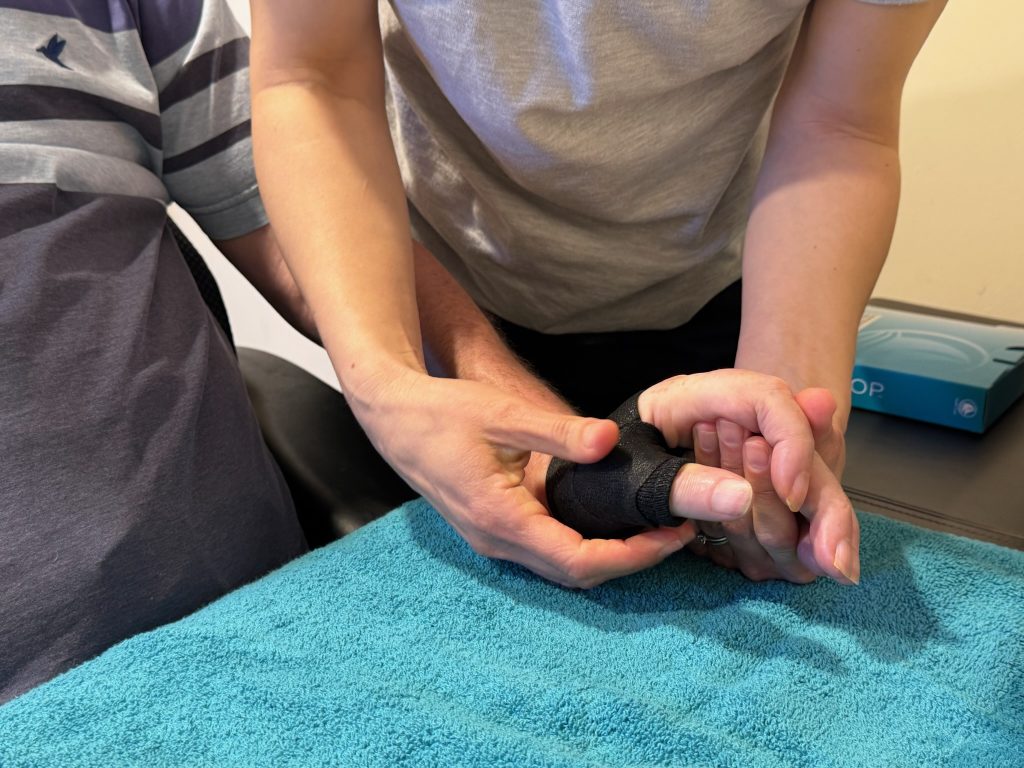
Splints are used to:
• Protect joints affected by weakness, spasticity or altered tone
• Reduce pain and fatigue
• Position the hand and wrist safely
• Support muscle groups so you can practise functional tasks without strain
• Prevent secondary complications that can limit recovery long-term
A well-designed splint isn’t restrictive. It creates stability so that meaningful practice becomes possible. When the hand is aligned properly, you can attempt tasks that would otherwise be out of reach.
Moulds and adaptive equipment: enabling real-world function
Separate from splinting is mould-making – custom-built pieces of equipment designed to make a specific task achievable. This is where OT becomes truly personalised.
One client at Vim had lost the ability to grip a pen after his injury. Writing his name – something he’d done automatically all his life – suddenly felt impossible. He had to use two hand to hold the pen and even then still struggled to grip.
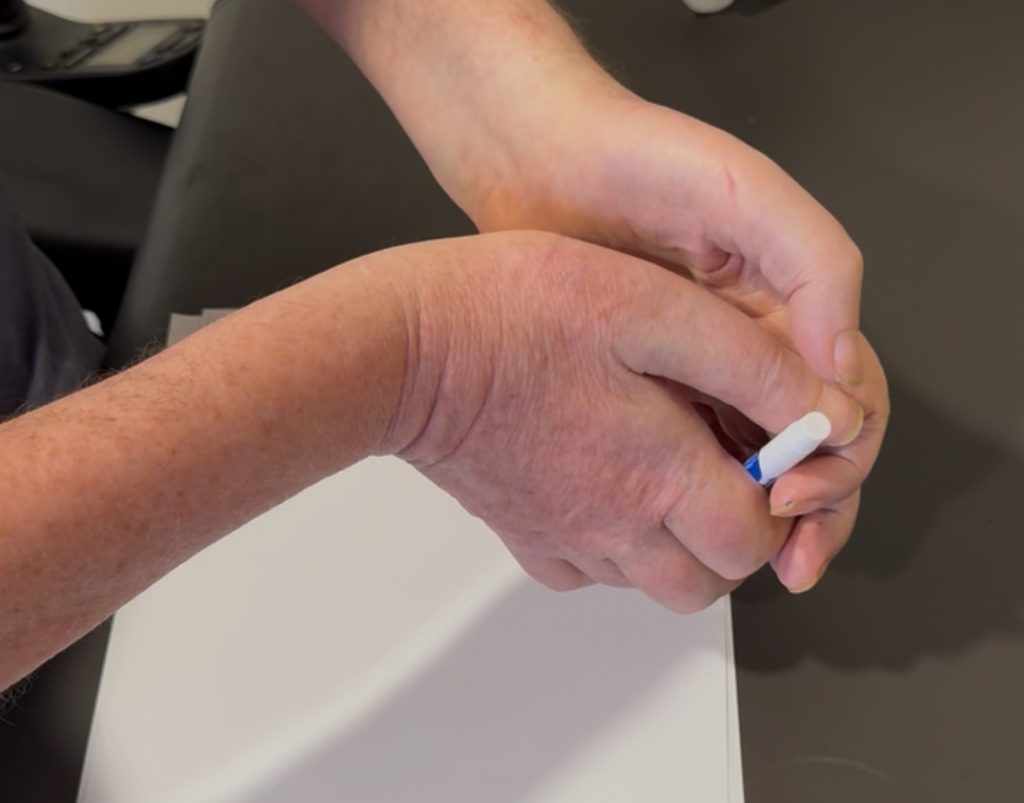
Rachel created a bespoke mould around the pen that enabled him to grip and hold it, giving him the control and stability he needed. The impact was striking. In the “before” image, he can barely hold the pen. In the “after”, he writes his name clearly and independently. It wasn’t magic. It was thoughtful, evidence-based design tailored to his needs.
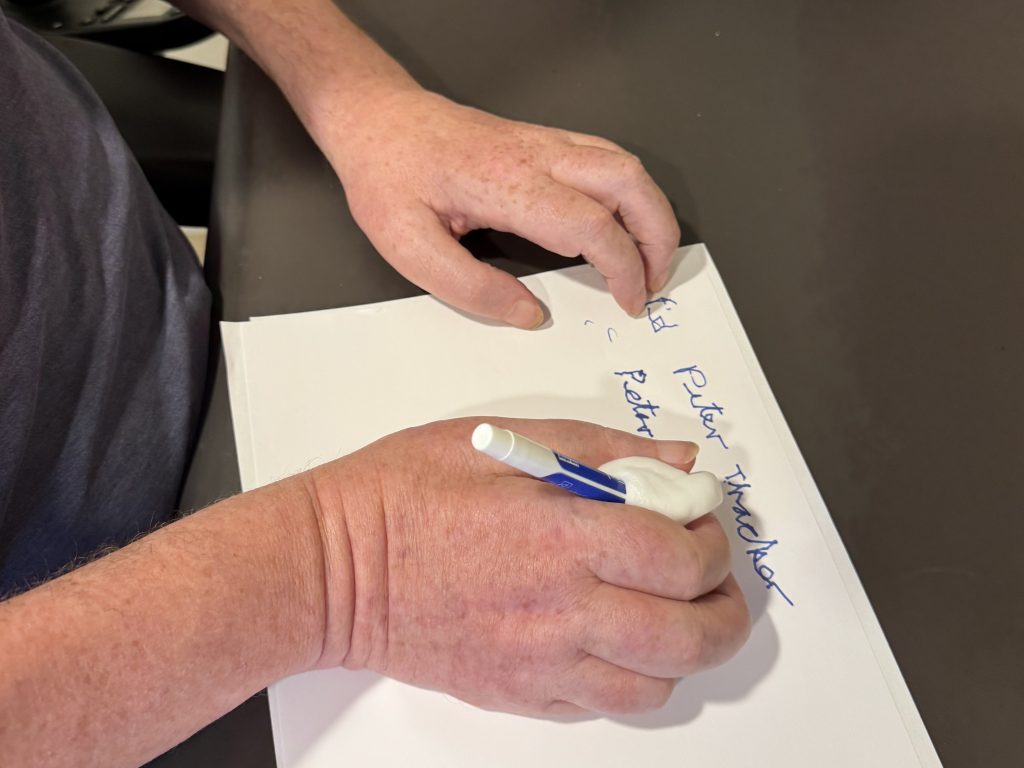
Adaptive moulds like this aren’t about making tasks easier. They’re about making them possible.
The hidden gains you don’t always feel at first
Beyond the visible progress, Occupational Therapy builds deeper, often unnoticed benefits:
Improved endurance.
Better problem-solving.
More efficient brain–body communication.
Reduced risk of injury.
Greater emotional resilience.
Little by little, it restores confidence. You begin to trust your hand again. You start reaching for things you once avoided. You rediscover parts of your life you thought were gone.
Slow and Steady, wins the race.
Recovery is never a quick fix. It shows up in the quiet, persistent effort of practising everyday tasks until they become yours again.
Occupational therapy is full of moments that build on each other — small sparks that gradually turn into confidence, control, and a renewed sense of what your body can do. Every reach, grasp and guided movement is part of a bigger journey back towards independence.
What happens in the clinic may look simple, but its impact reaches into every corner of daily life. With the right support, the right tools, and the right practice, your abilities don’t just return — they grow.
Reclaiming your life starts with Occupational Therapy and these everyday wins that matter. If you’re ready to explore what’s possible for your upper limb recovery, you can book a private occupational therapy assessment with us today. Head to our contact page to get in touch now.
